


Crocs has transformed from a niche clog maker into a global footwear powerhouse by embracing bold marketing choices and staying consistent with its brand identity. The Crocs marketing strategy focuses on innovative design, celebrity collaborations, and community-driven campaigns that turn a once-polarizing product into a cultural icon. This approach not only fuels sales but also secures long-term relevance in a competitive fashion market.
The brand’s success comes from knowing exactly who it serves and how to reach them. Crocs connects with diverse audiences through social media engagement, limited-edition drops, and playful partnerships like the KFC collaboration that generated global buzz. By leaning into its distinctive look rather than shying away from criticism, Crocs built loyalty and positioned itself as both functional and fashionable.
This article explores how Crocs sets clear goals, defines its audience, and applies a strong marketing mix to achieve growth. It also breaks down the specific strategies and channels that power its campaigns, while offering practical insights on how these methods can be applied to other businesses.
Crocs Goals And Objectives
Crocs sets clear goals to maintain its position as a leading casual footwear brand. The company focuses on sustainable growth, product innovation, and expanding its customer base across global markets.
Under the leadership of CEO Andrew Rees, Crocs has outlined revenue targets that emphasize long-term profitability and operational efficiency. Strategic planning includes market penetration and maintaining consumer loyalty through consistent brand engagement.
Chief Marketing Officer Terence Reilly has played a key role in shaping brand perception. His approach highlights bold collaborations, digital marketing, and consumer-focused campaigns that strengthen Crocs’ distinct identity.
Key objectives include:
- Revenue Growth: Targeting multi-billion-dollar revenue milestones by mid-decade.
- Product Innovation: Introducing new designs and materials to align with consumer trends.
- Sustainability: Reducing environmental impact through eco-friendly initiatives.
- Brand Positioning: Leveraging collaborations and endorsements to stay culturally relevant.
A strategic analysis projects Crocs’ ambition to reach $5 billion in revenue by 2026 through expanded market penetration and product diversification, as noted in a strategic report.
The company also prioritizes customization and consumer engagement. By promoting personalization options, Crocs strengthens the emotional connection between customers and the brand, as seen in its marketing approach.
These objectives reflect a balance of financial performance, brand development, and long-term sustainability.
Who Is Crocs’s Target Audience?
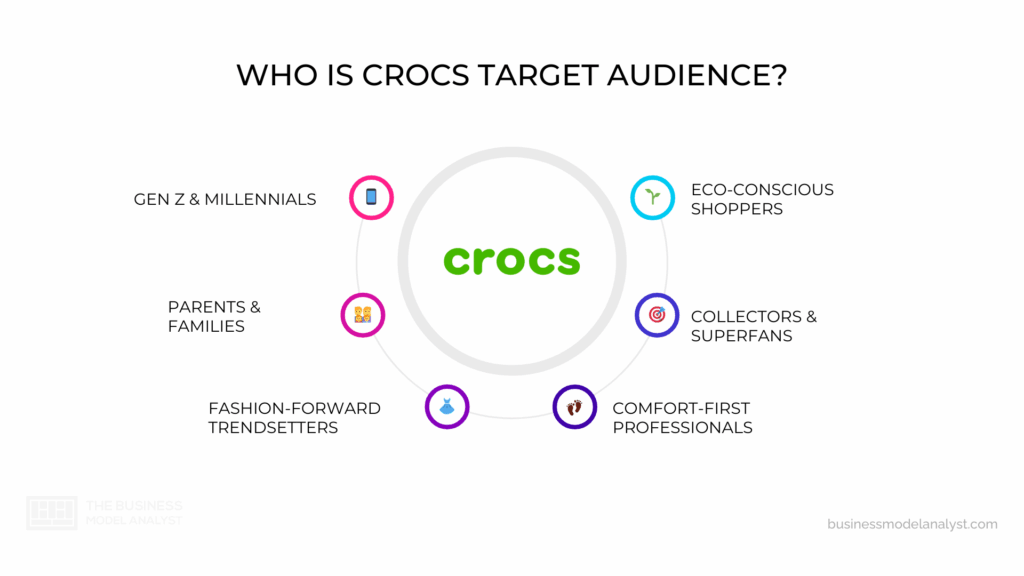
Crocs appeals to a wide range of consumers by balancing comfort, affordability, and style. The brand attracts buyers across different age groups, lifestyles, and regions, while also tailoring its products to specific needs in the footwear industry.
Crocs Demographics
Crocs customers span multiple age groups, but the largest share falls between teens, young adults, and middle-aged consumers. Children also represent a strong segment, as parents often purchase Crocs for their durability and ease of use.
Gender distribution is fairly balanced. Both men and women purchase Crocs, though women’s collections and collaborations often drive higher visibility.
Income levels vary, but most buyers fall into middle-income brackets. Crocs’ affordability compared to other casual footwear brands makes it accessible to a broad audience.
Healthcare professionals, restaurant workers, and parents form notable demographic subgroups. These buyers value Crocs for their practicality, comfort, and long-lasting wear. By covering both lifestyle and occupational needs, the company secures a wide demographic base.
Crocs Psychographics
Psychographic segmentation focuses on values, lifestyle, and personality traits. Crocs often attracts buyers who prioritize comfort over fashion, but it also appeals to those who enjoy bold self-expression.
The brand has tapped into a niche of consumers who appreciate customizable footwear. Jibbitz charms allow wearers to personalize their clogs, reinforcing individuality and creativity.
Fashion-conscious consumers also fall into Crocs’ audience, especially after high-profile collaborations with celebrities and designers. This group views Crocs as a playful, statement-making item rather than just practical footwear.
Crocs also resonates with buyers who value convenience. Easy slip-on designs, lightweight materials, and low maintenance align with busy lifestyles. This mix of comfort-seeking and trend-driven personalities keeps Crocs relevant across different psychographic groups.
Crocs Geography
Crocs sells in more than 80 countries, with North America and Europe representing its strongest markets. The United States remains a core region, supported by partnerships with retailers like Walmart that expand reach to mainstream consumers (Latterly.org).
In Europe, Crocs has gained traction among younger buyers who embrace casual and unconventional fashion. Meanwhile, Asia-Pacific markets show growth potential, particularly in countries where affordability and functionality drive footwear purchases.
Urban areas tend to see higher adoption rates due to exposure to fashion trends and retail availability. However, Crocs also performs well in suburban and rural regions where comfort and practicality are valued.
Geographic expansion strategies often include localized marketing and region-specific product lines. This approach helps Crocs adapt to cultural preferences and maintain global relevance in the footwear industry.
Crocs Behavior
Consumer behavior around Crocs reflects both practical and emotional drivers. Many buyers choose Crocs for functional reasons—comfort, easy cleaning, and durability. This makes them popular for work environments that require long hours of standing.
Impulse buying also plays a role, especially with limited-edition releases and celebrity collaborations. These products often sell quickly, appealing to trend-driven consumers who want exclusivity.
Repeat purchases are common, as customers often own multiple pairs for different uses such as work, leisure, and outdoor activities. Families frequently buy Crocs for children, replacing them as kids grow.
Social media engagement strongly influences behavior. Viral moments, influencer endorsements, and collaborations have turned Crocs into a lifestyle brand, not just a practical footwear option (CivicScience). This combination of utility and cultural relevance shapes consistent buying patterns.
Marketing Mix Of Crocs
Crocs has built its position in the global footwear market by balancing product innovation, accessible pricing, wide distribution, and distinctive promotional efforts. The brand relies on comfort-focused materials, strong retail presence, and collaborations that strengthen recognition across both mainstream and niche audiences.
Crocs Product
Crocs centers its product strategy on comfort and functionality. The brand’s signature material, Croslite, provides lightweight cushioning, durability, and water resistance. This material differentiates Crocs from traditional footwear and appeals to consumers seeking versatile shoes for casual, outdoor, and professional use.
The company offers a wide range of footwear beyond clogs, including sandals, slides, sneakers, and boots. Seasonal designs and limited-edition drops keep the lineup fresh and appeal to fashion-conscious buyers.
Customization plays a key role. Consumers can personalize their shoes with Jibbitz charms, which has become a steady revenue stream and a way to encourage brand loyalty.
Crocs also emphasizes sustainability by incorporating eco-minded materials in newer collections. This approach aligns with shifting consumer preferences and helps the brand stay relevant in a competitive market.
Crocs Price
Crocs uses a mid-range pricing strategy that balances affordability with perceived value. The core clog models are priced to remain accessible to a wide audience, while collaborations and limited editions command higher price points.
This tiered approach allows Crocs to capture both budget-conscious buyers and trend-driven consumers willing to pay a premium. For instance, celebrity collaborations often sell at higher margins due to exclusivity and demand.
Discounts and seasonal promotions are common, especially through online channels and outlet stores. These tactics help clear inventory while maintaining steady sales volume.
By positioning itself between low-cost footwear and high-end fashion, Crocs sustains broad appeal without diluting its brand image.
Crocs Place
Crocs maintains a strong global distribution network. Products are sold through company-owned stores, third-party retailers, e-commerce platforms, and marketplaces like Amazon. This mix ensures wide accessibility across different regions and demographics.
The brand invests heavily in direct-to-consumer channels. Its official website and mobile app highlight new collections and provide customization options not always available in retail stores.
Crocs also benefits from partnerships with large chains such as Foot Locker and department stores. These placements increase visibility in high-traffic shopping environments.
International expansion remains a focus, with Asia and Europe representing key growth markets. Consistent availability across regions supports brand awareness and customer loyalty.
Crocs Promotion
Crocs relies on bold and unconventional marketing campaigns to stand out. The company frequently uses celebrity endorsements and celebrity collaborations, such as partnerships with Post Malone and Balenciaga, to generate cultural relevance and media attention.
Social media plays a central role. Crocs engages audiences on Instagram, TikTok, and Twitter with playful content that emphasizes comfort and self-expression. User-generated content often amplifies reach and builds community.
The brand also experiments with limited-edition collaborations that tie into pop culture, such as its KFC-themed clogs. These campaigns create scarcity-driven demand and strengthen Crocs’ image as both functional and fashionable.
By combining digital-first strategies with experiential marketing, Crocs maintains strong brand awareness and adapts to evolving fashion trends.
What Are Crocs’s Strategies?
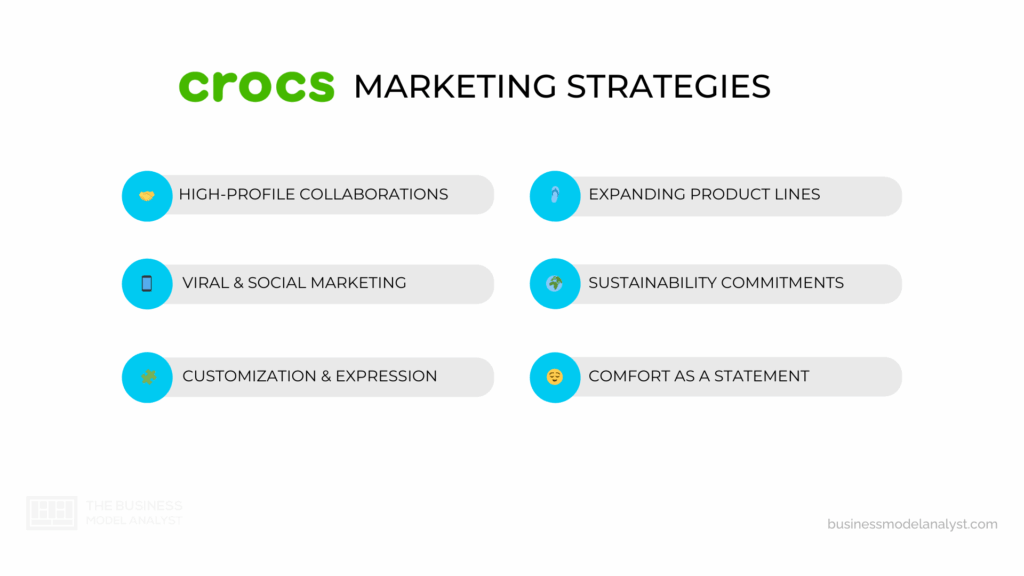
Crocs uses a multifaceted marketing strategy that combines comfort-focused messaging, bold collaborations, and digital engagement. The company positions its products as versatile footwear suitable for casual, lifestyle, and professional use.
A key tactic involves celebrity and brand collaborations. Partnerships with well-known figures and brands, such as the KFC collaboration, have helped Crocs generate buzz and strengthen cultural relevance (Indigo9 Digital).
The brand adapts to market trends by consistently innovating its product line. New designs, seasonal collections, and customizable features like Jibbitz charms allow Crocs to meet changing consumer preferences (The Brand Hopper).
Crocs also emphasizes digital and social media marketing. Campaigns highlight creativity and user-generated content, encouraging customers to engage directly with the brand online (Marketingino).
The company’s strategies can be summarized as:
| Strategy Area | Focus Point |
| Product Innovation | New designs, customization |
| Collaborations | Celebrities, global brands |
| Digital Presence | Social media, online campaigns |
| Retail & Distribution | Global reach in 90+ countries |
| Sustainability | Eco-friendly initiatives |
By combining these approaches, Crocs maintains strong visibility while adapting to consumer demand in the competitive footwear market (Latterly.org).
Crocs Channels
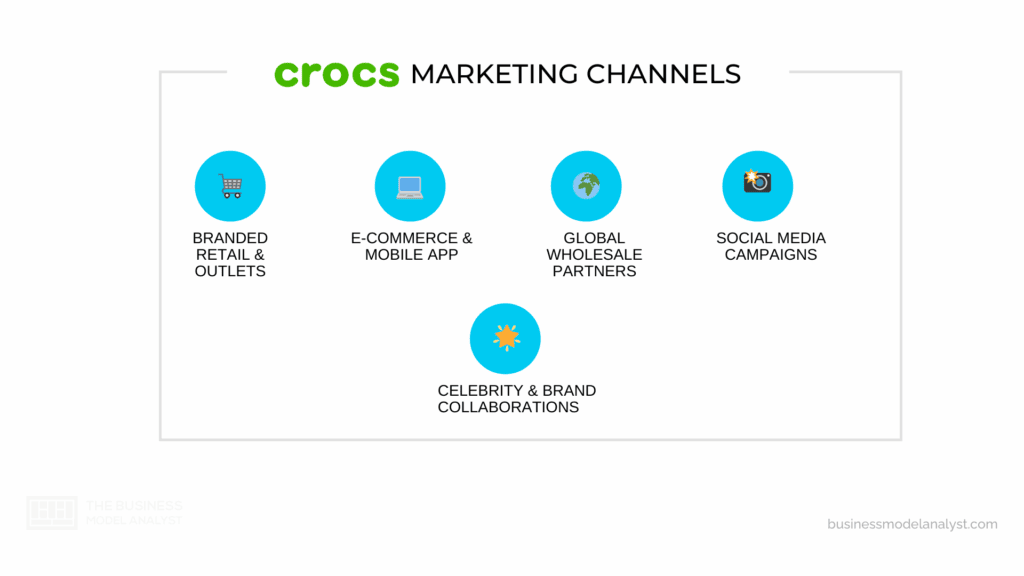
Crocs uses a multi-channel distribution strategy that combines wholesale, retail, and digital platforms. Their products reach customers through company-owned stores, e-commerce sites, and third-party retailers across North America, Europe, and Asia-Pacific. Wholesale remains a major driver, with partners such as shoe stores and sporting goods outlets accounting for a significant share of sales.
The brand invests heavily in e-commerce and digital marketing. Social media campaigns highlight collaborations and limited-edition releases, creating demand among younger audiences. Consistent branding across online and offline channels ensures that the company maintains a unified identity wherever customers engage with the brand, as noted in The Brand Hopper.
Celebrity collaborations play an important role in channel strategy. Partnerships with artists like Post Malone and Justin Bieber have generated high visibility through online drops, often selling out quickly. Collaborations with fashion labels such as Balenciaga and designers like Christopher Kane extend Crocs’ reach into luxury and high-fashion retail environments.
| Channel Type | Examples | Purpose |
| Wholesale | Shoe stores, sporting goods retailers | Broad market access |
| Retail | Company-owned outlets | Brand control and visibility |
| E-commerce | Crocs.com, online marketplaces | Direct-to-consumer engagement |
| Collaborations | Balenciaga, Post Malone, Justin Bieber | Trend-driven demand and buzz |
This mix of traditional retail, digital platforms, and high-profile collaborations allows Crocs to balance mass-market accessibility with fashion-forward exclusivity. By leveraging multiple channels, the company adapts to consumer preferences while expanding its global presence.
For example, Crocs’ partnerships and distribution strategies are detailed in Marketing91 and BrandVM.
How To Apply Crocs Strategies To Your Business
Businesses can learn from Crocs by focusing on distinctive brand positioning. Crocs embraced their polarizing design and turned it into a strength, showing that leaning into uniqueness can build recognition and loyalty.
Another approach is to use collaborations and partnerships. Crocs partnered with brands like KFC and high-profile celebrities to generate attention and expand reach. Strategic collaborations can introduce products to new audiences and refresh brand perception.
A focus on consumer engagement also matters. Crocs built a strong presence on social media by encouraging user-generated content and playful campaigns. Businesses can apply this by creating opportunities for customers to share experiences and interact with the brand.
| Crocs Strategy | Application for Businesses |
| Bold branding | Highlight unique features even if they are unconventional |
| Collaborations | Partner with relevant brands or influencers |
| Engagement | Use social platforms for interaction and feedback |
| Innovation | Introduce new products aligned with consumer trends |
Crocs also relied on product innovation by releasing new styles and customization options. Companies can adopt a similar practice by regularly updating offerings to match changing preferences, as seen in Crocs’ product innovation efforts.
Finally, segmentation and targeting play a role. Crocs used psychographic and demographic insights to refine their positioning, tailoring campaigns to specific customer groups, as explained in their marketing strategy. Businesses can achieve better results by aligning messages with the needs of defined segments.
Conclusion
Crocs has strengthened its position by combining product innovation with a distinct brand identity. The company emphasizes comfort, versatility, and functionality while adapting to changing consumer preferences.
A few key elements define its approach:
- Celebrity collaborations that expand cultural relevance
- Social media engagement that builds community and visibility
- Product diversification beyond the classic clog
- Sustainability initiatives that align with consumer expectations
This mix allows Crocs to appeal to both niche and mainstream audiences. By embracing its unique design rather than hiding it, the brand turned criticism into an advantage, as seen in its business strategy.
Crocs also applies the 4 P’s of marketing effectively.
| Marketing Element | Crocs’ Approach |
| Product | Lightweight, comfortable, and distinctive footwear |
| Price | Affordable with occasional premium collaborations |
| Place | Global retail, online platforms, and brand stores |
| Promotion | Influencer partnerships, campaigns, and collaborations |
The adaptability of this strategy has supported consistent market growth. Analysts note that Crocs’ focus on comfort and versatility has positioned it as both a casual fashion item and a functional everyday shoe, as highlighted in marketing analyses.
By balancing innovation, brand personality, and consumer engagement, Crocs continues to maintain relevance in a competitive footwear industry. This approach provides a framework for how companies can leverage distinctiveness to achieve long-term brand strength.
Frequently Asked Questions
Crocs has built its marketing approach on product differentiation, celebrity collaborations, digital engagement, and sustainability initiatives. The brand has adapted its image through campaigns that highlight comfort, versatility, and playful design while also keeping pace with changing consumer expectations.
How does Crocs differentiate its products in a competitive market?
Crocs sets itself apart through its lightweight foam material, comfort-focused design, and wide customization options. The company emphasizes versatility by offering clogs, sandals, and collaborations that appeal to both casual wearers and fashion-forward consumers. Product personalization through Jibbitz charms also reinforces individuality and brand loyalty.
What advertising channels are most effective for Crocs’ target demographic?
Digital and social media platforms remain central to Crocs’ outreach. The brand invests heavily in Instagram, TikTok, and influencer-driven campaigns to connect with younger audiences. Retail partnerships and online marketplaces also support visibility across global markets.
In what ways has Crocs’ collaboration with celebrities influenced brand perception?
Celebrity partnerships have helped shift Crocs from a niche comfort shoe to a mainstream fashion statement. Collaborations with figures like Post Malone and high-profile brands such as Balenciaga have expanded its cultural relevance. Even playful campaigns, such as its KFC collaboration, highlight Crocs’ ability to blend humor with style.
How does Crocs engage with customers on social media platforms?
Crocs uses interactive campaigns, user-generated content, and influencer partnerships to keep audiences engaged. The brand encourages fans to share personalized looks and often amplifies this content on official channels. This approach builds community while reinforcing the playful identity of the brand.
What strategies has Crocs implemented to ensure sustainability in its marketing practices?
Crocs has highlighted its move toward more sustainable materials and packaging. Marketing campaigns emphasize reduced environmental impact, including the use of bio-based Croslite material. The company positions these efforts as part of a broader commitment to responsible production and long-term brand trust.
How has Crocs’ brand image evolved with its marketing campaigns over the years?
Initially seen as a functional but unfashionable shoe, Crocs repositioned itself through bold marketing and collaborations. Campaigns now highlight comfort, versatility, and cultural relevance, helping the brand transition into both lifestyle and fashion markets. This evolution has allowed Crocs to maintain strong consumer interest across different demographics.
link