

Descriptive statistics
The analysis results (Table 1) reveal that the age group of 18 to 35 years old dominates the audience of social media short video content, with 18 to 25 years old accounting for 40.59% and 26 to 35 years old accounting for 29.3%, indicating that the middle-aged and young groups account for a significant portion of short video consumption. This suggests that users in this age group have a high degree of attention and participation in short video content. In terms of education level, the proportion of respondents with a college degree or above is relatively high, with 40.32% of them having a bachelor’s degree and 26.07% having a master’s degree or above, indicating that the more educated group is more inclined to watch social media short videos.
According to the distribution of respondents’ monthly incomes, 50.54% had an income between 1001 and 8000, 21.51% had an income between 8001 and 12,000, 14.78% had an income over 12,000, and 13.17% had an income of less than 2,000. These data indicate that the middle-income group is the primary consumer of short video content, demonstrating a strong purchasing power and potential for consumption. According to the occupational background, the largest group consisted of 38.44% company staff, then 18.28% employees of government agencies and public institutions, 17.47% self-employed or freelance, and 15.59% students. This indicates that short-video content marketing is likely to influence consumers from diverse occupational backgrounds, particularly company employees and government agency personnel.
Furthermore, a full 100% of respondents reported having watched short videos on social media, demonstrating the widespread popularity of these content types among users. In summary, the audience group for social media short video content is characterized by youthfulness, high education, and higher consumption ability, providing a solid empirical foundation for further exploring the influence of short video content on consumers’ purchase intention.
In addition to demographic characteristics, descriptive statistics were computed for the main constructs in this study, including usefulness (US), ease of use (ES), entertainment (EN), consumer trust (TR), and purchase intention (PI). Table 2 presents the means and standard deviations of these constructs.
The results indicate that ease of use (M = 3.25, SD = 0.783) and entertainment (M = 3.257, SD = 0.763) received the highest mean scores, suggesting that users generally perceive short video content as engaging and easy to interact with. Usefulness (M = 3.219, SD = 0.784) and consumer trust (M = 3.239, SD = 0.872) also exhibited relatively high ratings, indicating that viewers find short video content valuable and that it contributes to trust formation. Meanwhile, purchase intention (M = 3.098, SD = 0.85) had the lowest mean score among the constructs, implying that while short video content characteristics and consumer trust are influential, their direct effect on purchase intention may require further examination through structural modeling.
Common method biases
This study necessitated an examination of common method bias among the variables, given that the data originated from the individuals’ self-reports. To accomplish this, we performed a Harmon one-way test60 on all questions within the questionnaire. The findings indicated that five components had eigenvalues over 1, collectively accounting for 72.788% of the total variance. The first factor accounted for merely 35.625% of the variance, falling short of the 40% threshold. This signifies the absence of a substantial common technique bias issue in this study.
Validity and reliability
Before the structural equation modeling analysis, we conducted confirmatory factor analyses for each latent variable. Table 3 demonstrates the reliability and validity metrics for all latent variables. We assessed convergent validity by factor loadings and average variance extracted (AVE). Typically, factor loadings greater than 0.5 indicate that the factor has high convergent validity58,61. In this investigation, the factor loadings for each latent variable exceeded 0.5, thus satisfying the criteria. Moreover, the AVE values above 0.5 further demonstrate excellent convergence validity62. The AVE values in Table 3 are much higher than the 0.5 level for the latent variables of short-video content features (US), ease of use (ES), and entertainment (EN), as well as for trust (TR) and willingness to purchase (PI).
The study also looked at each latent variable’s composite reliability (CR). The scale is reliable if the CR value is above 0.761. The study found that all latent variables’ composite reliability (CR) values were higher than the critical value of 0.7. In that order, these values were 0.855, 0.859, 0.866, 0.898, and 0.914. This means that the scale had a high level of internal consistency. Meanwhile, Cronbach’s alpha coefficients for each latent variable were 0.852, 0.858, 0.865, 0.897, and 0.913, further validating the scale’s reliability. The Kaiser–Meyer–Olkin (KMO) measure and Bartlett’s Test of Sphericity returned a KMO value of 0.902 > 0.7 and a p-value of 0.000. This means that the variables in the measurement model were strongly connected. Overall, the scales in this study performed well in terms of reliability and validity, providing reliable support for subsequent analysis.
Tests of measurement models
We evaluated each structure individually and incorporated all relevant variables into the final model for comprehensive testing. The fit indices of the measurement model, as presented in Table 4, demonstrate an excellent fit: χ2/df = 1.099, TLI = 0.995, CFI = 0.996, IFI = 0.996, GFI = 0.954, NFI = 0.958, AGFI = 0.940, and RMSEA = 0.016. These metrics confirm a strong alignment between the observed data and the hypothesized model, thereby validating the model’s reliability and construct validity63.
Tests of discriminant validity
In Table 5, we can see the results of the Pearson correlation analysis that looked at the relationship between the usefulness, ease of use, and entertainment of short video content, consumer trust, and long-term purchase intention. It also shows the square root of the average variance extracted (AVE) values for each factor. We use the square root of AVE to measure the strength of the correlations among the factors. If the square root of a factor’s AVE value exceeds its Pearson correlation coefficient with other factors, it signifies that the factor possesses exceptional discriminant validity. The study’s results indicate that the correlation coefficients of the core variables are inferior to the square root values of their respective AVE. This shows a moderate relationship between the variables, yet they also exhibit significant differences. This supports the scale’s excellent discriminant validity.
Further analysis revealed significant positive correlations between each of these key variables. Specifically, there is a significant positive correlation between usefulness and ease of use (r = 0.30), entertainment (r = 0.343), consumer trust (r = 0.354), and purchase intention (r = 0.383); the relationship between ease of use and entertainment (r = 0.336), consumer trust (r = 0.280), and purchase intention (r = 0.346) also has a significant positive correlation; the relationship between entertainment and consumer trust (r = 0.389) and purchase intention (r = 0.398) is also substantial. In addition, the positive relationship between consumer trust and purchase intention (r = 0.408) is also significant. These results indicate that there is a strong correlation between the variables, which provides strong support for further testing the research hypotheses.
Tests of the structural modeling
After validating the reliability and validity of the questionnaire, the research model was further assessed using structural equation modeling (SEM) with AMOS software to evaluate the validity of the proposed hypotheses.
As shown in Table 6, the CMIN/df value of the model was 1.099, which falls within the acceptable range of 1 to 3. The TLI (0.995), GFI (0.954), CFI (0.996), IFI (0.996), NFI (0.958), and AGFI (0.940) all exceeded the recommended threshold of 0.9, indicating an excellent model fit. Additionally, the RMSEA value of 0.016 was well below the threshold of 0.08, further confirming the robustness of the model fit. Overall, all fit indices surpassed the recommended criteria63,64 demonstrating that the structural model provides a high level of explanatory power and applicability.
These model fit values are consistent with previous studies that have applied SEM in digital marketing and consumer trust research. For example, prior studies in short-video content marketing8,23 and digital consumer behavior31,52 reported similarly strong model fit indices, supporting the reliability of our findings. Compared to these earlier models, our results confirm that short-video content characteristics (usefulness, ease of use, and entertainment) have a significant role in shaping consumer trust and purchase intentions. These findings align with theoretical expectations and extend the stimulus–organism–response (S–O–R) model framework in the context of short-video marketing.
Based on the theoretical model proposed in this research, the structural equation modeling diagram was constructed using AMOS software, as shown in Fig. 2.

Result of structural modeling analysis.
Structural equation path coefficients and hypothesis testing results
The results of the path analysis, as shown in Table 7, indicate that the characteristics of short video content—usefulness (US), ease of use (ES), and entertainment (EN)—significantly and positively affect both consumer trust (TR) and purchase intention (PI).
Usefulness (US) demonstrated a substantial impact on consumer trust, with a standardized path coefficient of 0.321 (SE = 0.067, CR = 4.821, p < 0.001). Additionally, usefulness directly influenced purchase intention, with a path coefficient of 0.228 (SE = 0.055, CR = 4.133, p < 0.001). These findings suggest that usefulness not only enhances consumer trust but also directly drives purchase behavior.
Ease of use (ES) exhibited a positive relationship with consumer trust (path coefficient = 0.143, SE = 0.060, CR = 2.378, p = 0.017). Similarly, it positively influenced purchase intention, as evidenced by a path coefficient of 0.157 (SE = 0.048, CR = 3.253, p = 0.001). This indicates that ease of use plays a supportive role in fostering trust and encouraging purchase behavior.
Entertainment (EN) emerged as the most influential factor for building consumer trust and stimulating purchase intention. With a path coefficient of 0.340 (SE = 0.061, CR = 5.593, p < 0.001), entertainment had the most potent effect on trust. Moreover, it significantly impacted purchase intention (path coefficient = 0.197, SE = 0.051, CR = 3.895, p < 0.001). These results underscore the critical role of engaging and entertaining content in driving consumer trust and purchase behavior.
Consumer trust (TR) also served as a significant mediator between the characteristics of short video content and purchase intention, with a path coefficient of 0.170 (SE = 0.049, CR = 3.444, p < 0.001). This highlights the pivotal role of trust in linking the features of short video content to purchase intentions.
Overall, the findings confirm that the features of short video content have multifaceted effects on consumer trust and purchase intention. Among these features, entertainment content is the most significant factor for enhancing trust. Also, consumer trust effectively mediates the relationship between the characteristics of the content and the intention to buy. This gives businesses real-world information to improve short video strategies and increase consumer engagement and buying intention.
Mediation effect
This study employed the Bootstrap method and Hayes’ Process macro to analyze the mediating effect of consumer trust (TR) between short video content features and purchase intention (PI). Specifically, the study examined three dimensions of short video content—usefulness (US), ease of use (ES), and entertainment (EN)—as independent variables, with purchase intention as the dependent variable and consumer trust as the mediator. A repeated sampling of 5000 iterations at a 95% confidence level was conducted to validate the mediation model. The detailed results are presented in Table 8. By observing whether the 95% confidence intervals for the indirect effects exclude zero, the following conclusions were drawn:
First, the mediating effect of consumer trust in the relationship between usefulness (US) and purchase intention (PI) was significant (Est = 0.029, SE = 0.013, z = 2.23, p = 0.026, 95% CI [0.004, 0.055]). In addition, the direct effect was significant (Est = 0.175, z = 3.362, p = 0.001), and the total effect was 0.204 (z = 3.849, p < 0.001), indicating that consumer trust partially mediates this relationship, supporting H9.
Second, entertainment (EN) demonstrated a significant indirect effect on purchase intention (PI) through consumer trust (Est = 0.067, SE = 0.016, z = 4.078, p < 0.001, 95% CI [0.031, 0.095]). The direct effect was also significant (Est = 0.215, z = 3.86, p < 0.001), with a total effect of 0.282 (z = 5.119, p < 0.001). These findings confirm that consumer trust mediates the relationship between entertainment and purchase intention, supporting H10.
Lastly, ease of use (ES) exhibited a significant indirect effect on purchase intention (PI) via consumer trust (Est = 0.054, SE = 0.016, z = 3.394, p = 0.001, 95% CI [0.022, 0.084]). The direct effect (Est = 0.205, z = 3.851, p < 0.001) and total effect (Est = 0.259, z = 4.867, p < 0.001) further confirmed the partial mediation, supporting H8.
Overall, the results validate the mediating role of consumer trust in linking short video content features to purchase intention. All paths were found to be significant, indicating that usefulness, ease of use, and entertainment contribute to consumers’ purchase intention by enhancing trust. These findings offer critical insights into the mechanisms by which short video content influences consumer behavior, highlighting the importance of trust as a mediator.
Hypothesis testing results
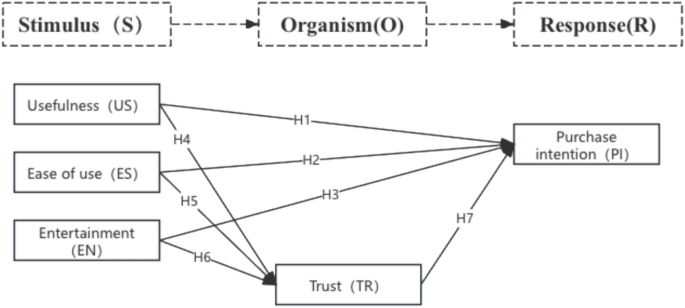
Table 9 presents the results of hypothesis testing, demonstrating that the usefulness, ease of use, and entertainment value of short video content have significant positive effects on consumer trust and purchase intentions. These findings provide support for hypotheses H1–H7. Furthermore, consumer trust serves as a partial mediator in the relationships between these content attributes and consumers’ purchase intentions, supporting hypotheses H8, H9, and H10. These results highlight the profound impact of short video content marketing on consumer behavior through the enhancement of consumer trust.
Figure 3 illustrates the hypothetical model framework based on the Stimulus–Organism–Response (SOR) theory. The model posits that the usefulness (US), ease of use (ES), and entertainment value (EN) of short video content serve as stimulus variables, influencing purchase intention (PI) through consumer trust (TR) as an organism variable. The significance of all pathways in the model has been confirmed through hypothesis testing. The coexistence of direct and indirect effects underscores the critical mediating role of consumer trust in the relationship between short video content marketing and purchase intentions.

Hypothetical framework diagram.
link